
Anastácia Kazmina
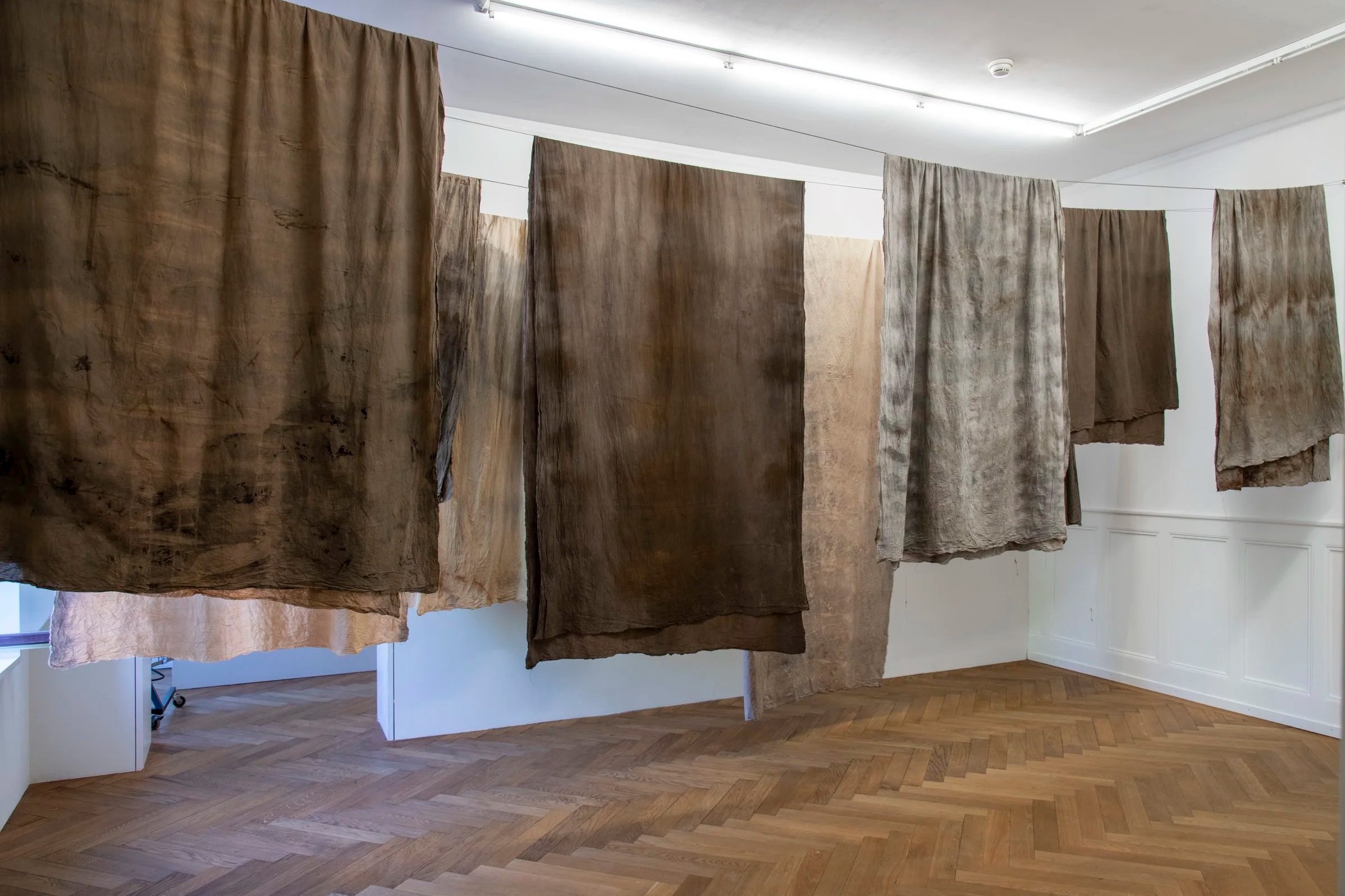
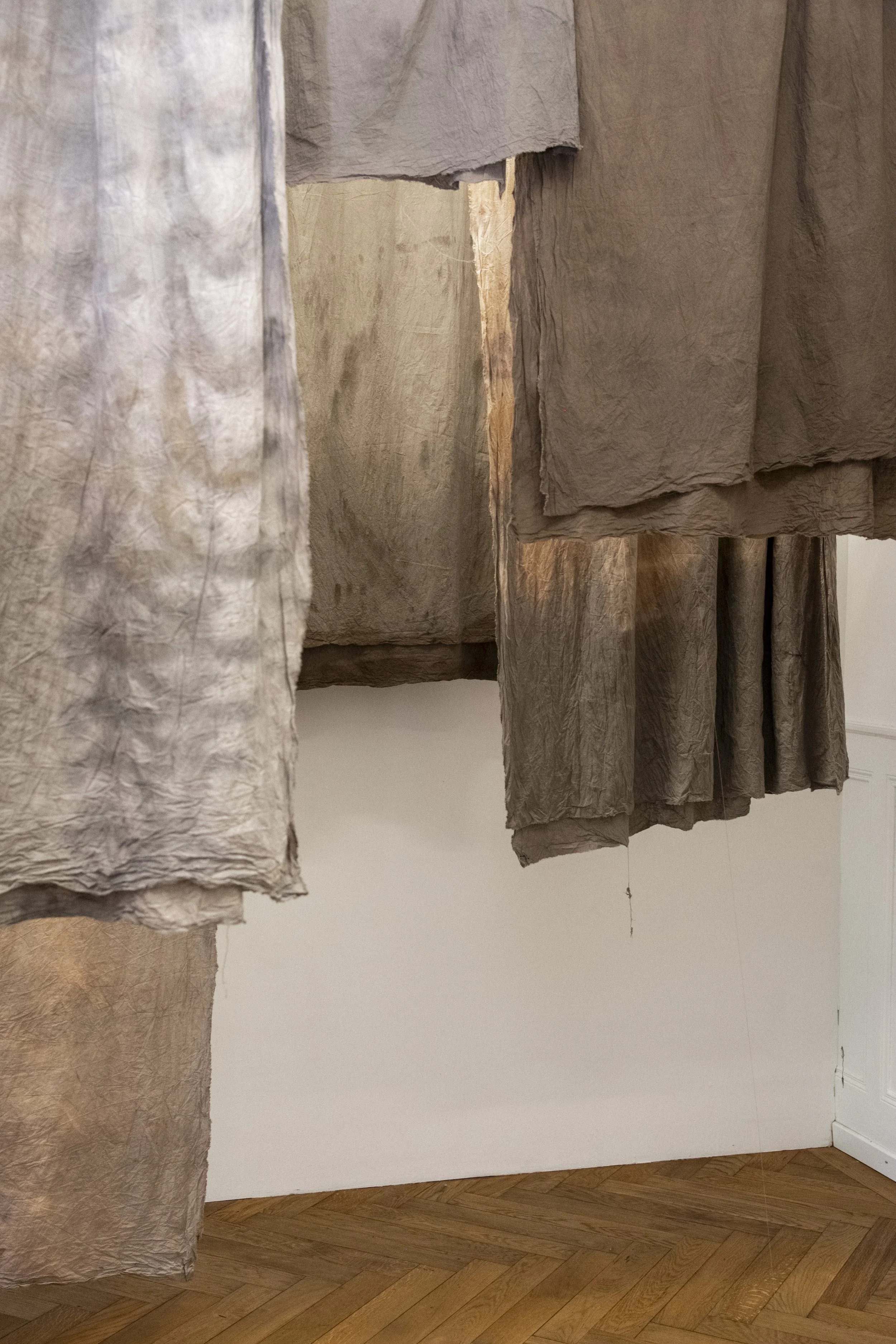
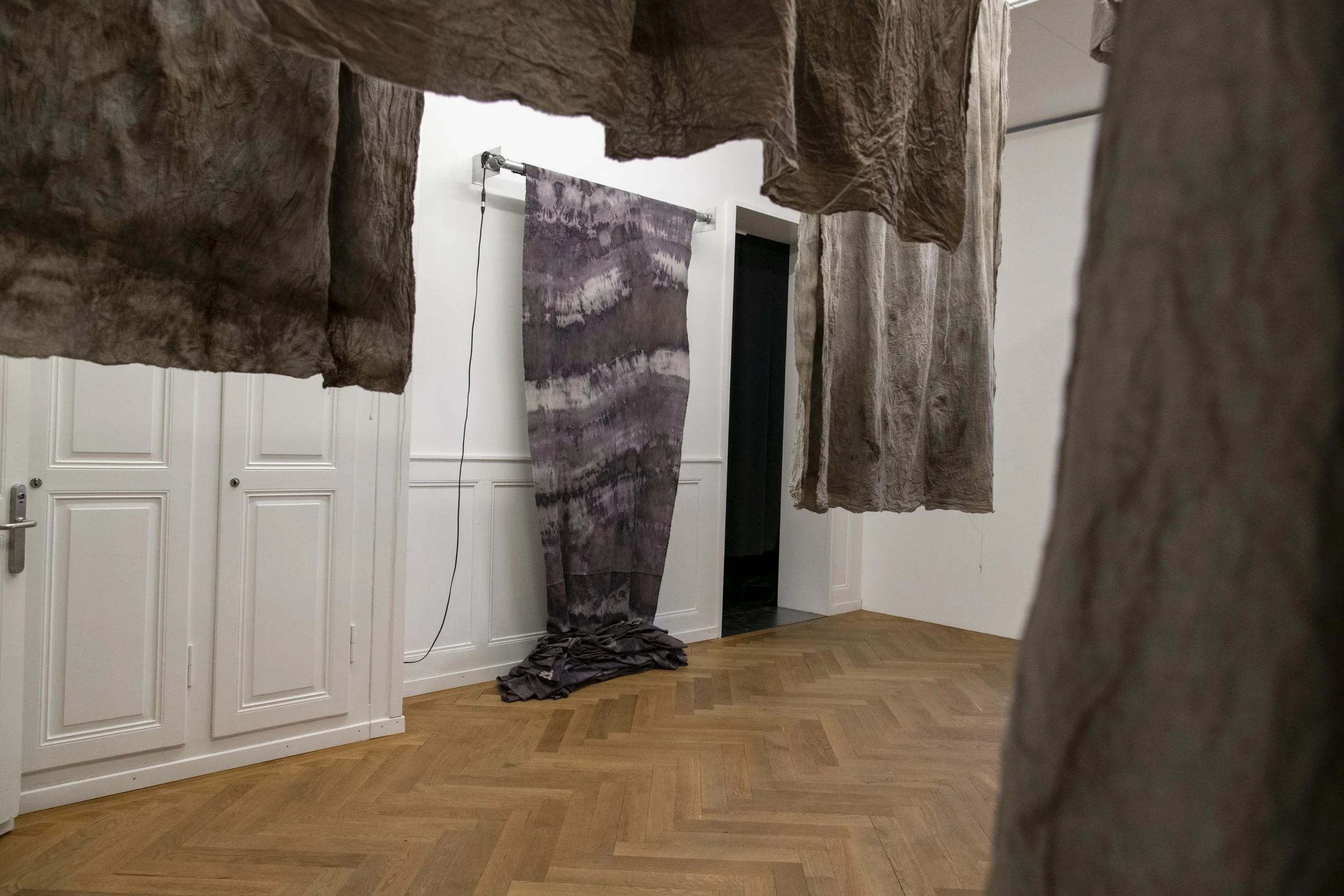
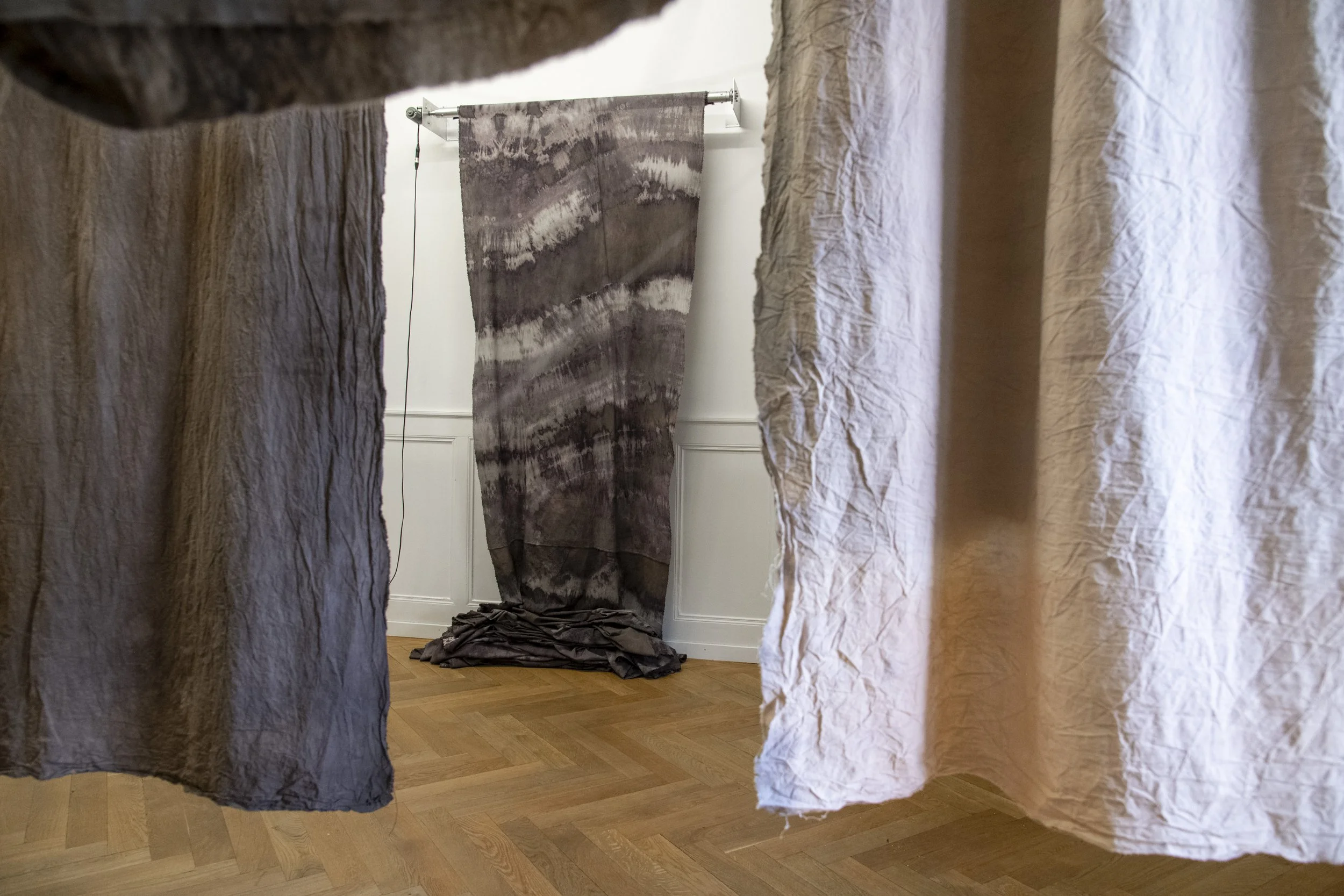
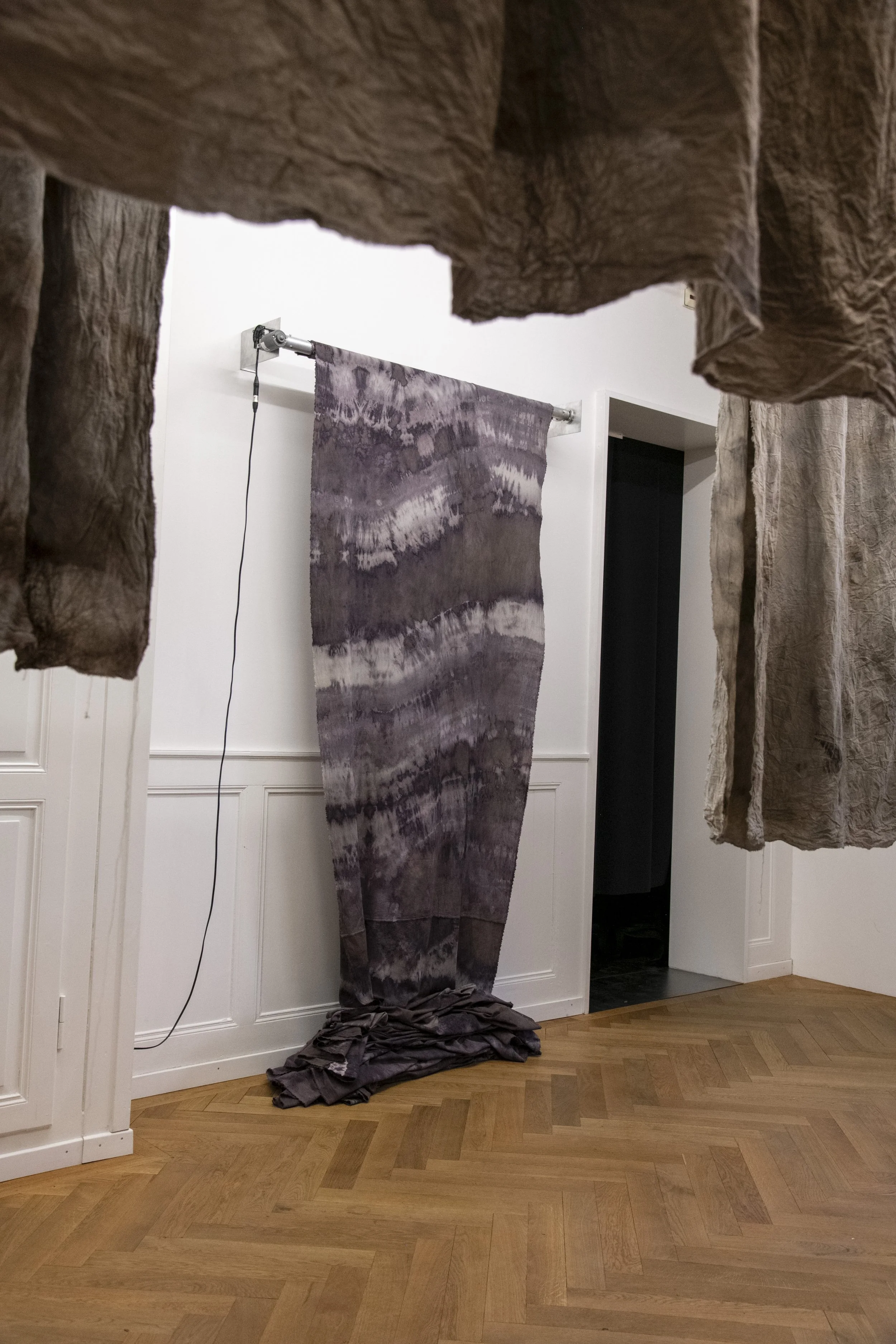
Folding Intimacies, 2026
Approx. 60 m of cotton fabric dyed with tannins, eucalyptus and iron sulfate, steel cable and pulleys
Variable dimensions
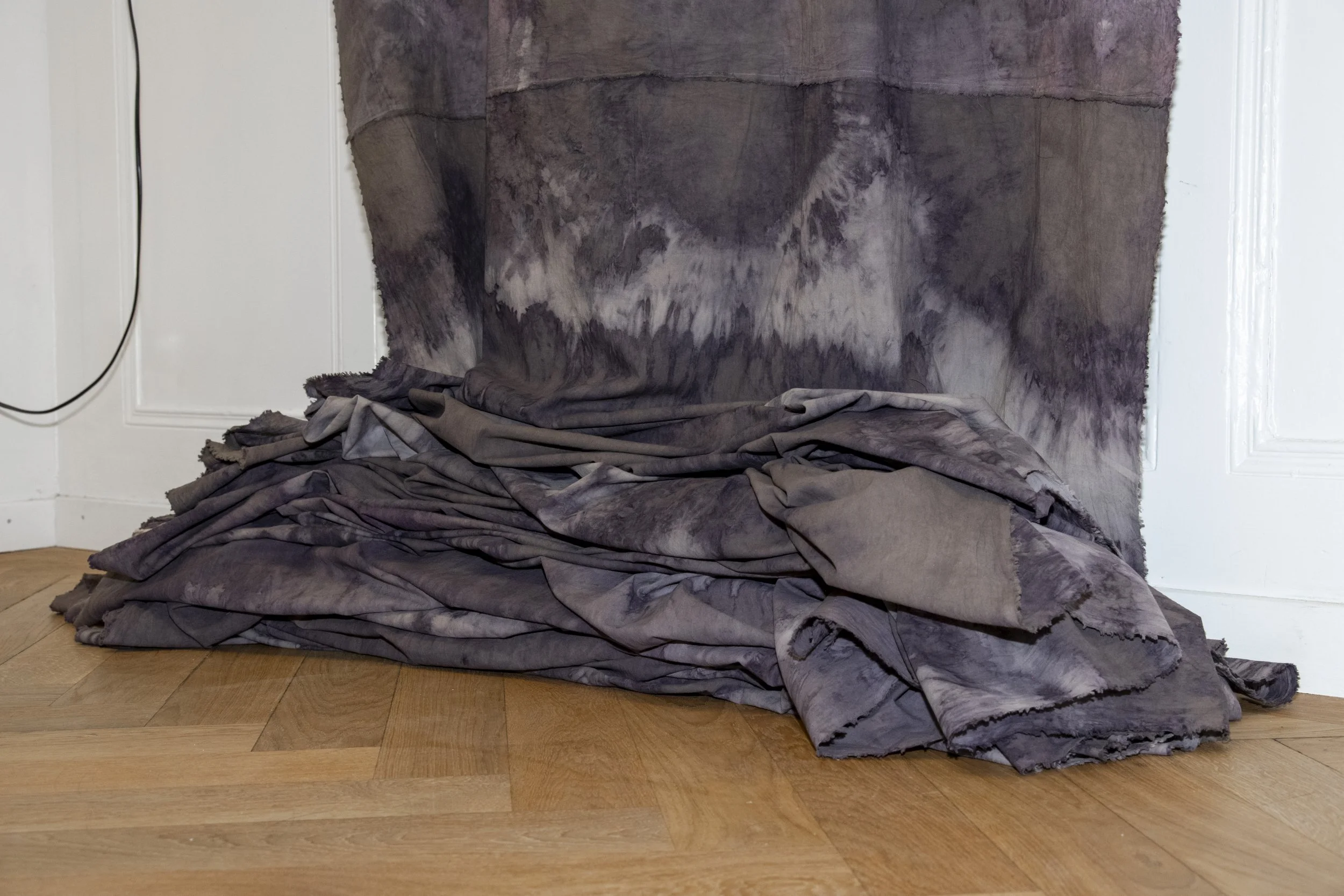
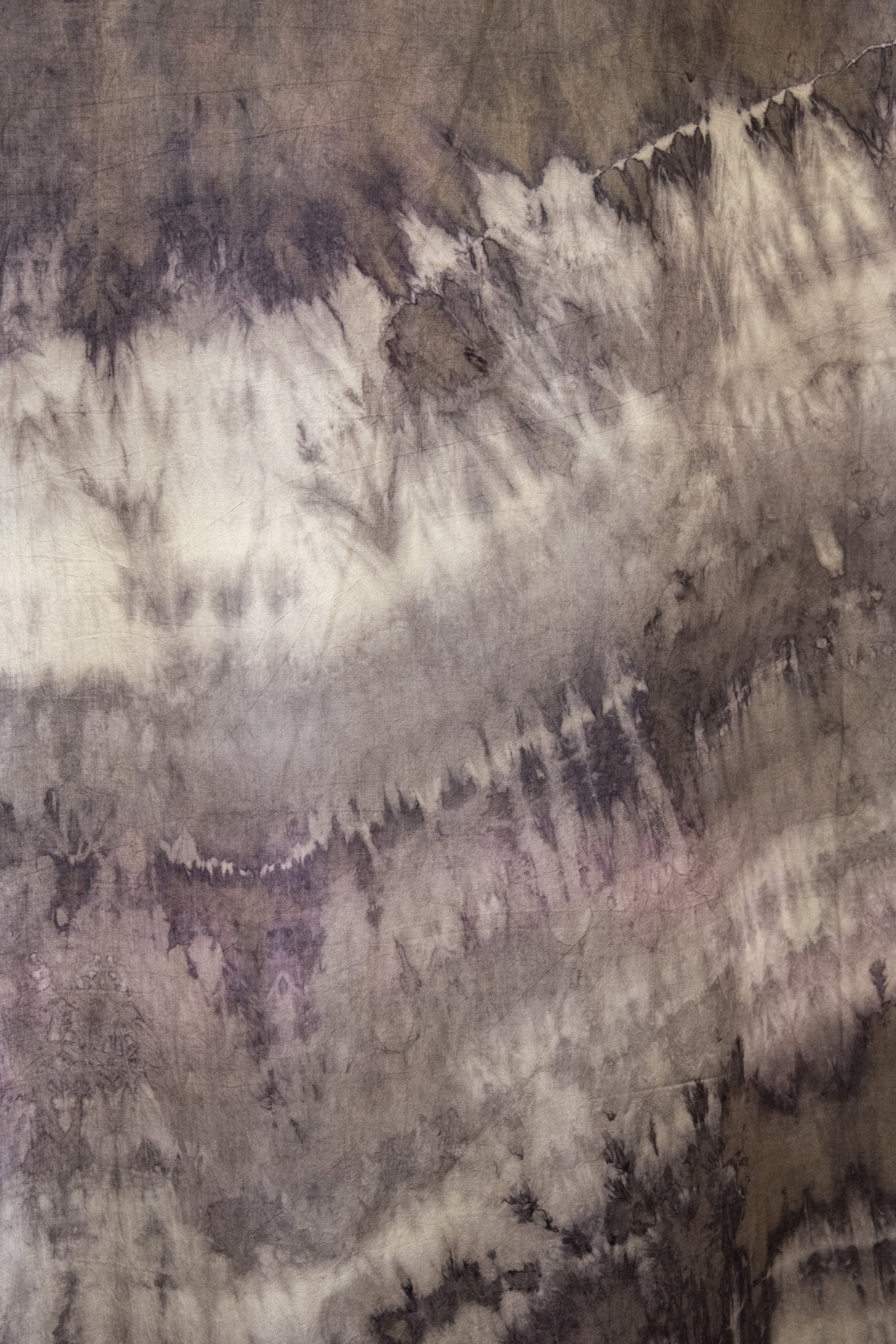
Untitled (Spinning Memory), 2026
20 meters cotton fabric sewn and dyed with kamala, campeche logwood, walnuthul and iron sulfate, aluminum structure and rotary motor
280 × 155 × 30 cm
Biography
Anastácia Kazmina (b. 2001, Lisbon) is a textile artist living and working in Bern. Through textile practices, her work explores the tensions between making and thinking, continuity and change, individuality and structure. Working across material processes and everyday forms of knowledge, she examines how textiles carry social, cultural, and emotional histories, while remaining vessels for transformation and negotiation.
Kazmina holds an MA in Contemporary Art Practice from the Hochschule der Künste Bern, supported by the Swiss Government Excellence Scholarship. She previously studied Visual Arts at ESAD (Caldas da Rainha, Portugal). Her work has been presented in Portugal and Switzerland, including at Cantonale (Switzerland, 2025/2026), Ammann-Falb Scholarship (Bern, 2025), Young Art Awards (Portugal, 2023) and Young Creators Award (Portugal, 2023). Her work is held in the collection of the Calouste Gulbenkian Foundation and João Luís Traça.
Artist Statement
Anastácia Kazmina’s practice approaches textiles as a means of reflecting on space, memory, and bodily presence. Through processes of repetition and suspension, materials such as thread and fabric are explored for their capacity to hold tension, malleability, and resilience simultaneously. The structures of textiles embedded within everyday life are further considered as ways of understanding not only material processes, but also forms of abstraction.
Particular attention is given to forms of labour historically associated with the domestic, and to the ways these continue to shape contemporary experiences of living and inhabiting space. Rather than understood as fixed or archival, memory emerges as something continually reworked through gesture, care, and transformation. Through their close relationship to the body and daily life, textiles become instruments where personal and collective histories intersect.